
Precision Custom Injection Molding for Automotive Production Now
Over 70% of a modern vehicle’s interior and exterior plastic components are produced through custom injection molding, a process where molten polymer is forced under high pressure into precision-engineered steel molds to form complex parts like dashboards, bumpers, and lighting housings. This method allows automotive-specific material formulations—such as glass-filled nylon or UV-resistant ABS—to achieve tight tolerances and high repeatability critical for safety and fit. By using multi-cavity molds, you can produce thousands of identical components per production run with minimal waste, enabling cost-effective mass manufacturing of durable, lightweight parts that reduce vehicle weight and improve fuel efficiency.
Why Tailored Plastic Part Manufacturing Drives Modern Vehicle Design
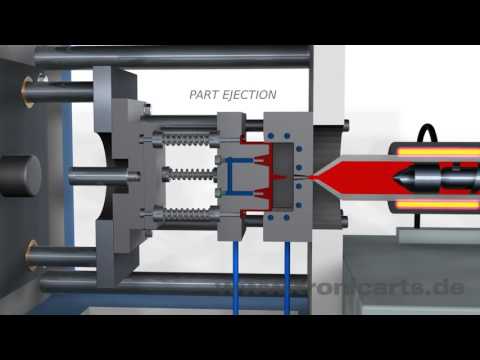
Tailored plastic part manufacturing through custom injection molding automotive directly enables the complex geometries and lightweight structures required in modern vehicles. By integrating reinforced materials and precise tooling, engineers can consolidate multiple metal components into single, robust plastic assemblies, reducing overall weight and improving fuel efficiency. This process allows for the seamless incorporation of functional features like snap-fits, living hinges, and integrated mounting points directly into the part design, streamlining assembly and enhancing durability. The result is a driving force behind modern vehicle design, where each plastic component is optimized for its specific structural or aesthetic role, from interior trim to under-the-hood applications, without compromising performance or safety.
Advantages of Bespoke Molding for Interior Cabin Components
Bespoke molding tailors interior cabin components to exact fit and feel, eliminating gaps and rattles that plague generic parts. This precision allows for ergonomic contours and soft-touch surfaces that enhance passenger comfort on long drives. Manufacturers integrate textured finishes directly into the mold, reducing post-production costs while achieving a premium, unified aesthetic. Custom geometries also enable seamless integration of lighting, vents, or storage nooks within the same panel, streamlining assembly and reducing weight. The end result is a cabin that feels both intentional and luxurious, directly improving everyday driving experience.
Bespoke molding delivers exact-fit interior components that boost comfort, reduce assembly complexity, and elevate perceived quality without costly secondary operations.
Lightweight Material Solutions That Improve Fuel Efficiency
Tailored plastic part manufacturing leverages advanced thermoplastics and composite blends to create lightweight material solutions that improve fuel efficiency. By replacing heavier metal components with high-strength polymers, engineers reduce vehicle mass directly, lowering the energy required for acceleration and maintaining momentum. These optimized parts, produced through custom injection molding, preserve structural integrity while shedding grams from every bracket, housing, and panel. The resulting weight reduction translates into tangible fuel savings per kilometer, as lighter cars demand less combustion or battery power. Material selection focuses on glass-filled nylon or polypropylene foams, ensuring stiffness without unnecessary bulk. Every gram eliminated is a direct contribution to lower fuel consumption and extended range, making these solutions essential for modern aerodynamic and efficiency targets.
How Precision Tooling Supports Complex Automotive Geometries
Precision tooling enables the exact replication of complex automotive geometries by utilizing advanced CNC machining and multi-axis EDM. This allows for intricate undercuts, thin-wall sections, and organically curved ducts within a single mold, eliminating the need for secondary assembly. Tight tolerances, often within ±0.005 mm, ensure that air-intake manifolds and structural battery housings interface perfectly with adjacent powertrain components. Furthermore, conformal cooling channels, directly machined into the tool steel, prevent warpage in these complex forms by uniformly dissipating heat, thus maintaining dimensional stability across thousands of production cycles.
Key Differences Between Standard and Application-Specific Molding Processes
In custom injection molding automotive, the key differences between standard and application-specific molding processes center on tooling complexity and material precision. Standard processes use generic molds and commodity thermoplastics, suitable for simple interior clips or under-hood covers. Application-specific molding, however, employs multi-cavity, conformal-cooled tooling and engineered compounds like glass-filled nylon or PEEK. This allows for tighter tolerances on high-strength brackets or fluid-handling components. The application-specific approach integrates design for manufacturability (DFM) directly into the mold geometry, reducing secondary operations. While standard molding offers faster cycle times for high-volume, low-precision parts, application-specific processes deliver superior dimensional stability and heat resistance critical for safety and powertrain systems. The investment in specialized tooling yields higher per-part consistency for complex geometries.
Tooling Lead Times for High-Volume Versus Low-Volume Production
Tooling lead times for high-volume production in custom injection molding automotive typically span 6–12 weeks due to complex, durable multi-cavity molds. In contrast, low-volume runs using aluminum or 3D-printed inserts can achieve lead times under 3 weeks. This speed advantage is critical for prototype iterations or niche parts, but sacrifices long-term tool life. For high-volume programs, investing in hardened steel tooling extends lead times upfront but ensures millions of cycles without degradation. Rapid tooling bridges the gap, offering moderate durability with faster delivery for bridge production.

Q: Why do high-volume molds take longer to machine?
A: They require precise steel hardening, complex cooling channels, and multi-cavity alignment to withstand continuous, high-cycle automotive production demands.
Material Selection Criteria for Under-the-Hood vs. Exterior Trim
Material selection for under-the-hood components demands high heat deflection temperatures, chemical resistance to oils and coolants, and dimensional stability across extreme thermal cycles. Exterior trim requires UV stabilization, impact resistance to stone chips, and aesthetic color matching that resists fading. Thermoplastics like PPA or PPS serve under-hood needs, while ASA or painted PC/ABS suit exterior surfaces. Heat deflection temperature versus UV exposure defines the fundamental divide, as under-hood parts prioritize thermal endurance and exterior parts prioritize weatherability.
- Under-the-hood: high continuous service temperature (150°C+) and hydrolysis resistance.
- Exterior trim: UV stabilizers, low gloss finishes, and coefficient of linear thermal expansion matching adjacent metal panels.
- Under-the-hood: resistance to coolant, oil, and grease swelling over 100,000+ miles.
- Exterior trim: no visible sink marks, Class A surface finish, and scratch resistance.
Cost Implications of Multi-Cavity Molds in Automotive Runs
For automotive runs, multi-cavity molds drastically shift cost structures. While the initial tooling investment is substantially higher, per-part price drops significantly at scale, making them essential for high-volume components like clips or housings. The break-even point for multi-cavity tooling hinges on annual production targets; below that threshold, simpler single-cavity molds are cheaper. However, balancing cavity count prevents downtime from imbalance, where uneven fill wastes material and slows cycles. Q: How does multi-cavity affect per-part cost? A: Spread across millions of parts, the higher upfront mold cost becomes negligible, yielding lower unit prices than running multiple single-cavity cycles. Misjudged cavity counts risk lost margin on low-volume variants.
Materials That Meet Stringent Automotive Standards
In custom injection molding automotive, high-performance engineering thermoplastics are critical for meeting stringent standards on flame retardancy and mechanical resilience. Materials like PEEK and LCP are specified for under-hood components demanding thermal stability up to 240°C, while PBT/ASA blends deliver UV resistance for exterior trims. Glass-filled nylon ensures dimensional stability in structural brackets under sustained vibration. Every formulation must pass rigorous UL 94 V-0 testing for fire safety, alongside OEM-specific impact and chemical-resistance benchmarks. These tightly controlled resin grades enable molders to produce lightweight, durable parts that replace metal without compromising crash safety or longevity.
Engineering-Grade Thermoplastics for Structural Durability
In custom injection molding for automotive, engineering-grade thermoplastics for structural durability replace metal in load-bearing components like brackets and housings. Materials such as reinforced PPA or PEEK withstand high mechanical stress, creep, and fatigue without cracking. These thermoplastics offer a high strength-to-weight ratio, reducing vehicle mass while maintaining impact resistance. Process parameters like controlled cooling and fiber orientation are tuned to maximize crystallinity and fiber alignment, directly boosting part longevity under cyclic loads.
How do engineering-grade thermoplastics achieve structural durability? They rely on long-fiber reinforcements and semi-crystalline polymer matrices that absorb energy and resist deformation, ensuring components handle real-world vibration and thermal cycling.
Flame-Retardant and UV-Resistant Polymer Blends
Flame-retardant and UV-resistant polymer blends are essential for interior and exterior automotive components, ensuring compliance with stringent safety and longevity standards. These blends, often combining materials like polycarbonate with halogen-free additives, suppress ignition while maintaining structural integrity. Custom injection molding allows precise dispersion of UV stabilizers to prevent discoloration and brittle cracking from sun exposure. However, balancing flame retardancy with UV stability requires specialized compounding to avoid migration of additives that could compromise surface appearance. For custom parts like dashboards or trim, tailored flame-retardant blends meet rigorous burn-rate tests and UV aging demands simultaneously.
Flame-retardant and UV-resistant polymer blends deliver fire safety and durable weatherability in custom molded automotive components.
Recycled and Bio-Based Feedstocks for Sustainability Targets

For custom injection molding automotive, using recycled and bio-based feedstocks helps hit sustainability targets without sacrificing performance. These materials include post-consumer recycled polypropylene for interior trim and bio-nylon derived from castor oil for under-hood components. They meet strict OEM specs by maintaining dimensional stability, impact resistance, and UV stability during molding.
- Recycled PET from bottles can be reprocessed into robust carpet fibers or structural brackets.
- Bio-based polyurethane foams, made from soy or hemp, reduce reliance on fossil fuels for seating and insulation.
- Recycled carbon fiber from scrap parts adds strength to lightweight exterior panels.
- Bio-based PLA compounds offer a lower-carbon option for non-structural clips and housings.
Integrating Smart Features Through Molded Electronics
In custom injection molding for automotive, molded electronics let us embed capacitive touch sensors directly into a dashboard’s surface, eliminating separate buttons that collect grime. During production, we overmold conductive circuits onto a sculpted panel for the center console, allowing the driver to adjust climate controls by simply swiping across the finished polymer. A passenger can trace a heating element’s path under the leather-like grain, feeling warmth spread through the door panel without a single wire becoming a potential snag point. This process fuses structural plastic with printed antennas, enabling keyless entry circuits to reside within a windshield frame’s trim, invisible but always listening.
Overmolding Techniques for Sensors and Touch Interfaces
For automotive touch interfaces, overmolding techniques for sensors and touch interfaces precisely encapsulate capacitive or force-sensing layers within a single shot of thermoplastic or LSR. A critical parameter is the thin-wall gap, typically 0.5–2.0 mm, maintained to prevent signal attenuation while ensuring hermetic sealing against moisture. Sequential injection of a rigid base, conductive in-mold electrode (IME) film, and FOX MOLD plastic injection mold manufacturer soft-touch topcoat creates a seamless panel. Unlike a film insert, direct overmolding avoids delamination under thermal cycling. The melt temperature must stay below the sensor substrate’s transition point—commonly 180°C for PET-based circuits—to avoid destroying circuitry.
| Aspect | Standard Overmolding | Sensor-Specific Overmolding |
|---|---|---|
| Material Flow Direction | Unidirectional | Multi-gated to avoid sensor shift |
| Pressure Control | High (800–1500 bar) | Low (300–600 bar) to protect IME |
| Post-Mold Curing | Ambient cooling | Controlled ramp-down at 5°C/min |
Insert Molding for Connectors and Wire Harness Components
Insert molding for connectors and wire harness components integrates metallic terminals and pre-assembled cable assemblies directly into a thermoplastic housing during the single-shot injection cycle. This process eliminates secondary assembly steps, as the molten plastic encapsulates the inserts to form a sealed, strain-relieved interface. For automotive applications, this approach ensures robust electrical connectivity and protection against vibration and moisture ingress within the connector body. The overmolded plastic locks the wire termination into a rigid structural position, preventing pull-out forces from compromising the circuit. This technique allows designers to consolidate gaskets, latches, and alignment features into one molded part, reducing part count and improving long-term durability in under-hood or cabin environments.
Sealing Methods That Protect Circuitry in Harsh Environments
In custom injection molding automotive, sealing methods that protect circuitry in harsh environments rely on overmolding with specialized elastomers that bond directly to electronic assemblies, forming a hermetic barrier. This process follows a clear sequence: first, the circuit is encapsulated with a liquid silicone rubber via injection, then cross-linked under heat to eliminate voids. Next, a secondary overmold of rigid thermoplastic creates a mechanical shield against salt spray and thermal shock. The result is a unitary part where no gaskets or adhesives are needed, ensuring signals stay clean even under continuous fluid exposure or vibration.
- Position the circuit board within the injection mold cavity.
- Inject low-viscosity silicone at controlled pressure to fill micro-gaps.
- Cure the silicone to achieve full adhesion to substrate and components.
- Overmold with engineering-grade plastic to lock out moisture and debris.
Quality Control and Regulatory Compliance in Vehicle Parts
In custom injection molding for vehicle parts, quality control hinges on dimensional validation using CMMs and optical scanners to ensure compliance with OEM fit-for-use standards. Regulatory compliance demands material traceability and documented process control for each production lot, as a single out-of-spec component can compromise safety systems. Q: What is the primary regulatory risk in custom automotive molding? A: Failing to maintain an unbroken chain of material certifications and in-process inspection records for functional parts like airbag housings or bracket mounts. Practical adherence requires real-time monitoring of melt flow and cavity pressure, directly tying machine parameters to the part’s final mechanical properties for liability protection.
IATF 16949 Certification and Process Validation Steps
For custom injection molding automotive parts, IATF 16949 certification is your quality backbone, paired tightly with structured process validation. This standard demands a clear validation sequence—starting with design reviews and FMEAs to catch risks early. You then perform Initial Sample Inspection Reports (ISIRs) and a full PPAP submission to prove your process consistently hits specs. Getting PPAP approved means your mold and machine parameters are locked in, reducing production surprises. A common Q&A: What’s the first step in process validation under IATF 16949? It begins with a Process Flow Diagram to map every step, setting the stage for a robust Control Plan.
Dimensional Inspection via CMM and Optical Scanning
For custom automotive injection molding, dimensional inspection via CMM and optical scanning ensures every complex geometry meets stringent tolerances. A CMM probe touches critical hardpoints like mounting bosses and seal grooves, verifying datums with micron-level accuracy. Meanwhile, optical scanners capture millions of points across freeform surfaces—such as intake manifold runners—flagging warpage or sink in seconds. This combination catches subtle deviations that compromise fit or function, directly linking inspection data to mold correction. Below, a quick comparison clarifies their roles:
| CMM (Contact) | Optical Scanning (Non-Contact) |
|---|---|
| Best for discrete, high-tolerance features | Best for full-surface profile mapping |
| Slower, but confirms datum alignment | Faster, highlighting global distortion |
Testing Protocols for Impact, Heat, and Chemical Resistance
When you’re getting custom injection molded automotive parts made, the testing protocols for impact, heat, and chemical resistance are where the rubber meets the road. For impact, technicians drop weighted pendulums or shoot projectiles at the part to simulate real-world collisions. Heat resistance testing involves blasting components in ovens above engine temps to check for warping or melting. Chemical resistance means dousing surfaces in gasoline, oil, and coolants to see if the plastic degrades. These checks ensure your parts won’t fail under the hood or on the dash. This is a vital part of comprehensive quality validation for automotive components.

- Impact tests often use either Izod or Charpy pendulum methods to measure toughness at different temperatures.
- Heat resistance testing cycles parts from -40°F to 300°F to confirm dimensional stability.
- Chemical resistance protocols require full immersion in specific fluids for 24-hour durations.
Trends Shaping the Future of Automotive Plastic Fabrication
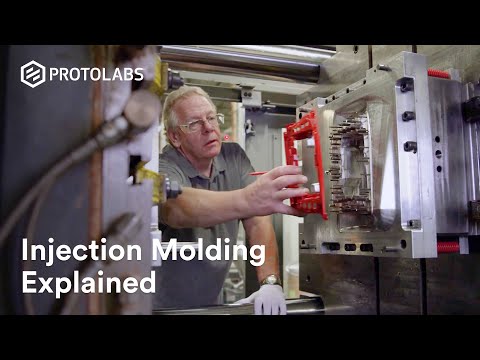
The future of custom injection molding automotive is being defined by a shift toward mucell microcellular foaming, which allows for lighter, warp-free structural parts without sacrificing strength. Simultaneously, in-mold assembly with multi-shot injection is replacing post-production fasteners, enabling the creation of fully assembled dashboard panels and lighting housings in a single cycle. The integration of real-time cavity pressure sensors with AI-driven adaptive process control now permits immediate self-correction during production, eliminating sink marks and flash before they occur. These advancements allow molders to produce complex, thinner-walled geometries with tighter tolerances while reducing cycle times, directly supporting the industry’s push toward rapid prototyping and low-volume high-mix manufacturing for next-generation vehicle interiors and underhood components.
Additive Manufacturing Hybrids for Rapid Prototyping
Additive Manufacturing Hybrids for Rapid Prototyping merge 3D printing with traditional machining to produce functional, end-use-ready parts for custom injection molding automotive applications. This approach creates complex geometries, such as conformal cooling channels, directly into prototype tools, slashing lead times from weeks to days. By layering metal or polymer onto a machined substrate, hybrids deliver injection-grade surface finishes and material properties without sacrificing speed. Designers validate fit, form, and function under real production conditions, iterating tooling inserts over lunch breaks rather than month-long cycles. The result is a seamless bridge from concept to low-volume manufacturing, where every cycle tests both the part and the hybrid tool’s durability under molding stresses.
In-Mold Decoration and Painted Finishes Without Secondary Steps
In-mold decoration (IMD) and painted finishes without secondary steps eliminate post-molding painting by integrating color, texture, or high-gloss surfaces directly into the injection cycle. IMD uses a pre-printed carrier film inserted into the mold; melt fuses the film to the substrate, yielding durable, scratch-resistant graphics. Structural painting alternatives, such as resin-rich surface formulations or mold-textured tooling, achieve Class-A paint-like sheen without clearcoat or spray booths. Both approaches reduce part cost, cycle time, and VOC emissions while ensuring perfect registration and consistent gloss. They are ideal for interior bezels, trim panels, or exterior grilles where precision appearance must align with functional plastic performance.
Data-Driven Mold Flow Simulation to Reduce Defects
Data-driven mold flow simulation leverages historical production data and machine learning to predict defect formation in custom automotive parts, moving beyond idealized CAD models. By analyzing real-world viscosity, pressure, and cooling variances, the simulation pinpoints exact locations where predictive defect minimization is needed—such as sink marks or weld lines—before steel is cut. This allows engineers to iteratively adjust gate placement, fill rates, and thermal zones in the virtual environment, eliminating trial-and-error tooling rework. Q: How does this simulation reduce scrap rates? A: It identifies the precise melt-front velocity threshold that causes shear-induced degradation in thin-wall automotive components, enabling real-time process parameter locking to maintain defect-free production windows.
Shifts Toward Modular Tooling for Flexible Production Lines
In custom injection molding automotive, a definitive shift toward modular tooling for flexible production lines is redefining efficiency. Rather than building dedicated, single-use molds, manufacturers now deploy interchangeable core and cavity inserts within a common frame. This allows a single press to produce multiple interior trim or under-hood components sequentially, slashing changeover time from hours to minutes. The practical benefit is reduced tooling inventory and the ability to pivot production between high-volume and low-volume runs without retooling entirely. A common question arises: How does modular tooling handle complex geometries like speaker grilles? Answer: Inserts are precision-machined per part, ensuring that surface finish and tolerance remain consistent, while the base frame absorbs thermal stress, extending total tool life.